
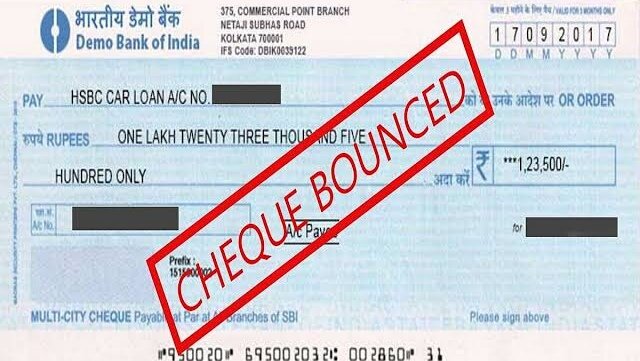
In a landmark decision dated 25 September 2025, the Supreme Court of India (SC) in Sanjabij Tari v. Kishore S. Borcar & Anr. (Criminal Appeal No. 1755 of 2010; 2025 INSC 1158) has reshaped how cases under Negotiable Instruments Act, 1881 (“NI Act”), specifically Section 138, are to be handled. The ruling blends doctrinal clarifications and procedural reforms aimed at expediting justice in cheque‑bounce matters.
Facts & Background
In this case, the complainant had advanced a friendly loan of ₹ 6 lakh to the accused, who in turn issued a cheque for discharge of the debt. The cheque was dishonoured. The Trial Court and Sessions Court convicted the accused under Section 138 NI Act, but the Bombay High Court (Goa Bench) in revision overturned the conviction ex parte. The SC intervened to restore the convictions.
Key Legal Holdings
- Statutory Presumptions Strengthened
The SC reaffirmed that once execution of the cheque is admitted, the presumptions under Section 118 (that a cheque was drawn for consideration) and Section 139 (that cheque was drawn in discharge of a legally enforceable debt) of the NI Act apply in favour of the complainant. The onus shifts to the accused to rebut such presumptions by cogent evidence. - Cash Loans & Enforceability Clarified
A major point: the Court held that a cash loan above ₹ 20,000 — even if in breach of Section 269SS of the Income Tax Act, 1961 (which restricts acceptance of cash loans above that threshold) — does not render the transaction unenforceable for purposes of Section 138. The mere violation of tax law attracts penalty under Section 271D but does not void the debt. - High Court Revision Limits
The Court criticised the High Court for upsetting concurrent findings of fact in revision without showing perversity. Revisional jurisdiction cannot re‑evaluate evidence unless findings are perverse. The SC restored the conviction accordingly.
Procedural Reforms & Guidelines
Acknowledging the huge backlog of Section 138 NI Act cases (for instance, over 6.5 lakh pending in Delhi alone as on Sept 2025) the SC introduced a suite of reforms.
- Summons and Service: Summons are to be served not just through conventional modes but also “dasti” (by complainant) and via electronic means (email/WhatsApp) where rules allow. The summons must mention the accused’s option to pay the cheque amount at the initial stage via online link/QR/UPI.
- No Pre‑cognizance Summons under BNSS Section 223: The SC clarified that in NI Act Section 138 complaints, pre‑cognizance summons under Section 223 of the Bharatiya Nagarik Suraksha Sanhita, 2023 (BNSS), 2023 are not required.
- Compounding Guidelines Modified: The earlier guidelines (from Damodar S. Prabhu v. Sayed Babalal H., 2010) have been tweaked:
- If payment is made before recording defence evidence → compounding can be without cost.
- If made after defence evidence but before judgment → 5% of cheque amount as cost.
- At Sessions/HC revision stage → 7.5%.
- At Supreme Court stage → 10%.
- Dashboard Monitoring & Dedicated Online Payment: District Courts are directed to set up online QR/UPI payment modules, maintain dashboards to track pendency, and Chief Justices to form committees to monitor progress.
Practical Implications
- For complainants: The decision strengthens your position — once a signed cheque is admitted, the burden is largely on the accused. Ensure your demand notice is valid, cheque is presented appropriately, and you keep service proof.
- For accused/drawers: You must organise credible evidence if you intend to rebut the presumptions under Sections 118/139. Claims such as “friendly loan” or “blank cheque for bank loan” will need strong documentation to succeed (the SC found the blank cheque defence in this case “unbelievable”).
- For all stakeholders: Cases under Section 138 should no longer drag for years simply on procedural delays. The reform package aims for speed, settlement and fairness.
Why This Judgment Matters
The Sanjabij Tari judgment is significant because it marries doctrinal reinforcement with case‑flow innovations:
- It clarifies major ambiguities — e.g., cash loans above ₹ 20,000 do not get excluded.
- It reasserts that Section 138 NI Act is not to be treated as a mere civil recovery suit but a special penal provision with serious consequences and concomitant safeguards.
- It pushes courts to adopt technological and procedural changes to deal with the overwhelming backlog of cheque‑bounce cases.
Conclusion
The 2025 judgment in Sanjabij Tari v. Kishore S. Borcar marks a definite pivot in cheque‑bounce jurisprudence in India. It underscores that the NI Act’s deterrent and credit‑preserving purpose must be respected — not eroded through procedural laxity or doctrinal doubts. At the same time, the Court’s willingness to launch reform‑oriented tools (digital service, compounding tweaks, online payment mechanisms) reflects a pragmatic recognition of systemic overload.
If you’re involved in a Section 138 NI Act matter (either as a complainant or accused), it is imperative to revisit your case in light of this judgment: check your demand notice, presentation, service proof, documentation for the debt, and be aware of the new compounding/settlement possibilities.